




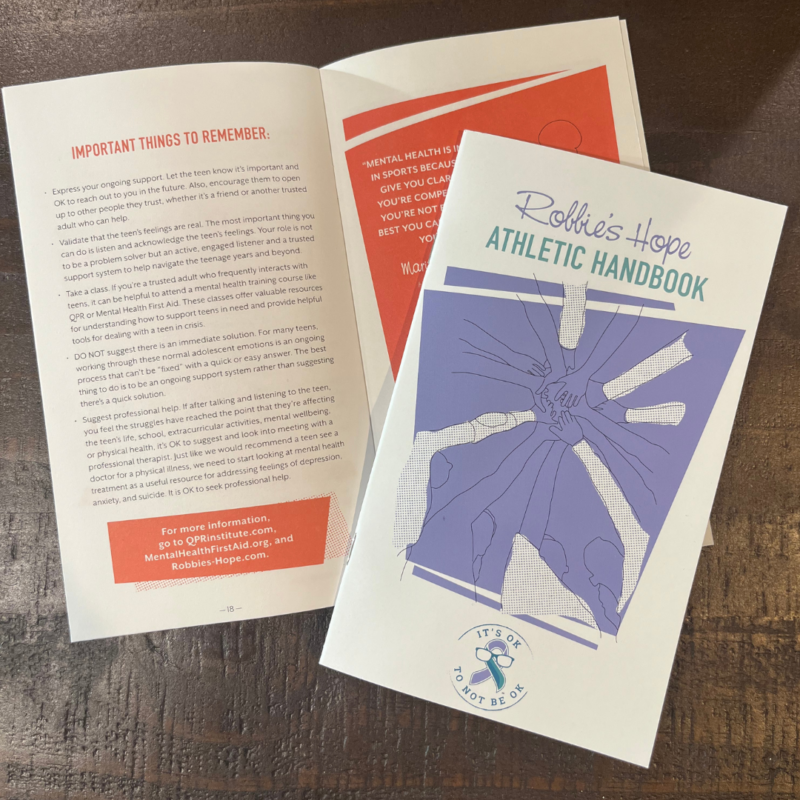
Robbie’s Hope is excited to announce the release of our Athletic Handbook, a guide intended for athletes, parents of athletes, and coaches to raise awareness about mental health in sports and initiate conversations to prevent issues from arising. This guide represents the third installment in our series of handbooks designed to provide valuable resources for parents, trusted adults, and teens dealing with mental health issues. In this guide, you will discover a wealth of information on the prevalence of mental health concerns in sports, along with coping strategies. Athletes, like anyone, can experience a wide array of mental health challenges. In the competitive and high-pressure nature of youth sports, mental health-related issues are commonly overlooked. The demands of training, competition, and performance all contribute to a person’s overall well-being, and the conversation surrounding athletes’ mental health is highly stigmatized. This guide is composed of three parts: Signs and Symptoms, For Athletes, and Coaches and Parents.
In Part 1, “Signs and Symptoms of Mental Health Issues in Athletes”, the guide dives into the mental concerns often seen in sports, including depression, anxiety, burnout, and eating disorders. This section gives insight into athlete-specific symptoms of mental health issues and the warning signs that may be displayed. The aim is to raise awareness of the mental aspect of sports and how mental health looks different in an athletic setting. Athletes, coaches, and parents need to be aware of these warning signs to combat issues early on before they start to have an impact on performance or the overall well-being of the athlete.
Part 2, “For Athletes”, is written by athletes for athletes, drawing from athletes’ own experiences. The section displays various practices that athletes should take into account to maintain a positive mental state and performance. The biggest point to take away is that sports are as much mental as they are physical, and athletes cannot optimize their performance unless they properly take care of themselves mentally.
The final part of the handbook, “For Coaches and Parents”, is aimed at the trusted adults who are involved in their athlete’s life. This resource provides information to help coaches and parents identify the different types of mental health issues and how to prevent them. Adults need to be open with their athletes about mental illness in sports, and the best prevention strategy is to destigmatize the conversation, spread awareness about what they are, and provide information on how to prevent them.
